General Aircraft GAL.49 Hamilcar
General Aircraft Ltd · Heavy Military Transport Glider / Heavy Equipment Airborne Delivery (Tanks / Artillery) · UK · WWII (1939–1945)
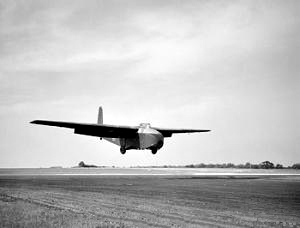
The General Aircraft GAL.49 Hamilcar was the largest and heaviest British assault glider of WWII — designed specifically to deliver light tanks and large vehicles by air to drop zones behind enemy lines. General Aircraft Ltd built 412 Hamilcars between 1942 and August 1945. The Hamilcar was 30% larger than the contemporary Airspeed Horsa and could carry an entire 8-tonne Tetrarch light tank or two universal carriers. The aircraft flew on D-Day (6 June 1944), at Arnhem (September 1944), and during the Rhine crossings (March 1945) — the only WWII glider built large enough to deliver armoured vehicles.
The Hamilcar was a monocoque wooden assault glider with twin tail fins. Wingspan 110 ft; gross weight 36,000 lb. The aircraft had a hinged nose that opened upward — the same configuration later used on the Aero Spacelines Super Guppy outsize-cargo aircraft 20 years later. Crew: 2 pilots. Cargo capacity: 17,500 lb of cargo or one Tetrarch / Locust light tank or two universal carriers + 25 troops, or various combinations of vehicles + troops. Towing speed 150 mph; gliding speed 100 mph; the towing aircraft had to be a four-engine type (typically Halifax or Stirling) because of the Hamilcar's weight.
D-Day saw 30 Hamilcars deliver 6th Airborne Division anti-tank guns and Bren-gun-carriers to landing zones near the Orne River. Arnhem (Operation Market Garden, 17-26 September 1944) saw 30 more Hamilcars deliver 17-pounder anti-tank guns and the British 1st Airborne Division's heavy equipment. Rhine crossings (Operation Varsity, 24 March 1945) saw 48 Hamilcars deliver heavy weapons during the largest single airborne operation of WWII. The Hamilcar's combat losses were heavy — about 200 of 412 produced were lost in WWII operations (49% loss rate, the highest of any WWII airframe).
The Hamilcar X variant added two Bristol Mercury radial engines to make the glider self-powered for the long Pacific-theater flight to Singapore and Burma — one of the few combat aircraft ever designed to fly under engine power and then convert to glider for the final attack run. About 22 Hamilcar X airframes were built; the type was retired before any Pacific operations. About 1 Hamilcar airframe component survives in 2026 — a fuselage section recovered from a 1945 RAF crash site, on display at the Imperial War Museum Duxford. No complete Hamilcar exists.
For Kids — a shorter, friendlier version
The Hamilcar was the biggest British glider used in World War Two. It had no engine, so a large plane had to tow it into the sky. Once released, the pilots glided it down to land troops and vehicles. It was built from wood and had two tail fins.
General Aircraft Ltd made 412 Hamilcars between 1942 and 1945. It was about 30% larger than the Horsa, another famous British glider. Its wingspan was 110 feet, which is longer than many city buses parked end to end. It could carry up to 36,000 pounds when fully loaded.
The coolest part of the Hamilcar was its nose. The whole front swung open like a big door. This let crews drive heavy vehicles straight out after landing. The same nose idea was later used on a huge cargo plane called the Super Guppy.
The Hamilcar carried a real tank called the Tetrarch. No other glider in World War Two was big enough to do that. It could also carry two smaller armored vehicles plus soldiers. A crew of just two pilots flew the whole thing.
The Hamilcar flew in some of the biggest battles of the war. It took part in D-Day in June 1944, the Battle of Arnhem, and the Rhine crossings in 1945. These missions helped Allied forces break through enemy lines in Europe.
Fun Facts
- The Hamilcar was bigger than any other British glider used in World War Two.
- Its nose swung open so a whole tank could drive straight out after landing.
- The Hamilcar's wingspan was 110 feet — longer than a basketball court!
- It was towed into the air by four-engine planes like the Halifax or Stirling bomber.
- The Hamilcar could carry an entire Tetrarch light tank — no other WWII glider could do that.
- It flew without any engine at all, gliding silently down to the ground.
- General Aircraft built 412 of these giant wooden gliders in just a few years.
- The nose-opening design was so clever it was used on a famous cargo plane 20 years later.
Kids’ Questions
How did the Hamilcar get into the air if it had no engine?
A big four-engine plane, like a Halifax or Stirling bomber, would tow the Hamilcar with a long cable. Once the glider reached the right place, the pilots released the cable and glided down on their own. Two pilots controlled the glider all the way to the ground.
How did the tank get out of the glider after landing?
The Hamilcar had a special hinged nose that swung upward like a giant door. Once the glider landed, the front opened up and the tank simply drove right out. This was a very new idea at the time.
Where did the Hamilcar fly during the war?
The Hamilcar flew in three big operations. It took part in D-Day on June 6, 1944, then at Arnhem in September 1944, and finally during the Rhine crossings in March 1945. These were some of the most important battles in Europe.
Variants
- Hamilcar Mk I
- Standard production assault glider. 390 built. 17,500 lb cargo capacity; hinged nose for vehicle drive-out.
- Hamilcar X (powered)
- Self-powered variant with two Bristol Mercury radial engines added. About 22 built. Designed for long Pacific-theater flights but retired before any in-service use.
Notable Operators
- Royal Air Force / Glider Pilot Regiment
- Sole operator. RAF Stirlings and Halifaxes towed the Hamilcars; Glider Pilot Regiment flew them. D-Day, Arnhem, Rhine crossings 1944-1945.
Frequently Asked Questions
What did the Hamilcar carry?
17,500 lb cargo capacity — one 8-tonne Tetrarch or M22 Locust light tank, or two universal carriers + 25 troops, or one 17-pounder anti-tank gun + crew + tractor + 25 troops. The hinged nose let armoured vehicles drive out of the front of the glider after landing.
How is the Hamilcar different from the Horsa?
The Airspeed Horsa was a smaller troop / light-vehicle glider (25 troops or one Jeep). The Hamilcar was 30% larger and could carry a tank — an entire light armoured vehicle (Tetrarch or M22 Locust). The Hamilcar required a four-engine tug (Halifax or Stirling); the Horsa could be towed by twin-engine aircraft.
Did Hamilcars fly on D-Day?
Yes — 30 Hamilcars delivered 6th Airborne Division anti-tank guns and Bren-gun-carriers to landing zones near the Orne River on 6 June 1944. The aircraft's heavy-vehicle capability was essential to giving British airborne forces enough firepower to hold their drop zones until seaborne reinforcements arrived.
How many Hamilcars were built?
412 airframes between 1942 and August 1945. Production was at General Aircraft Ltd's Hanworth plant. About 200 of the 412 were lost in WWII operations — a 49% loss rate, the highest of any WWII airframe of any type.
Sources
See Also
- Airspeed AS.51 Horsa — Smaller British WWII assault glider
- Waco CG-4A Hadrian — Sister U.S. WWII assault glider
- Short Stirling — Hamilcar tug aircraft (Stirling Mk IV)
- Handley Page Halifax — Hamilcar tug aircraft
- Antonov A-40 Krylya Tanka — Soviet "flying tank" assault glider concept